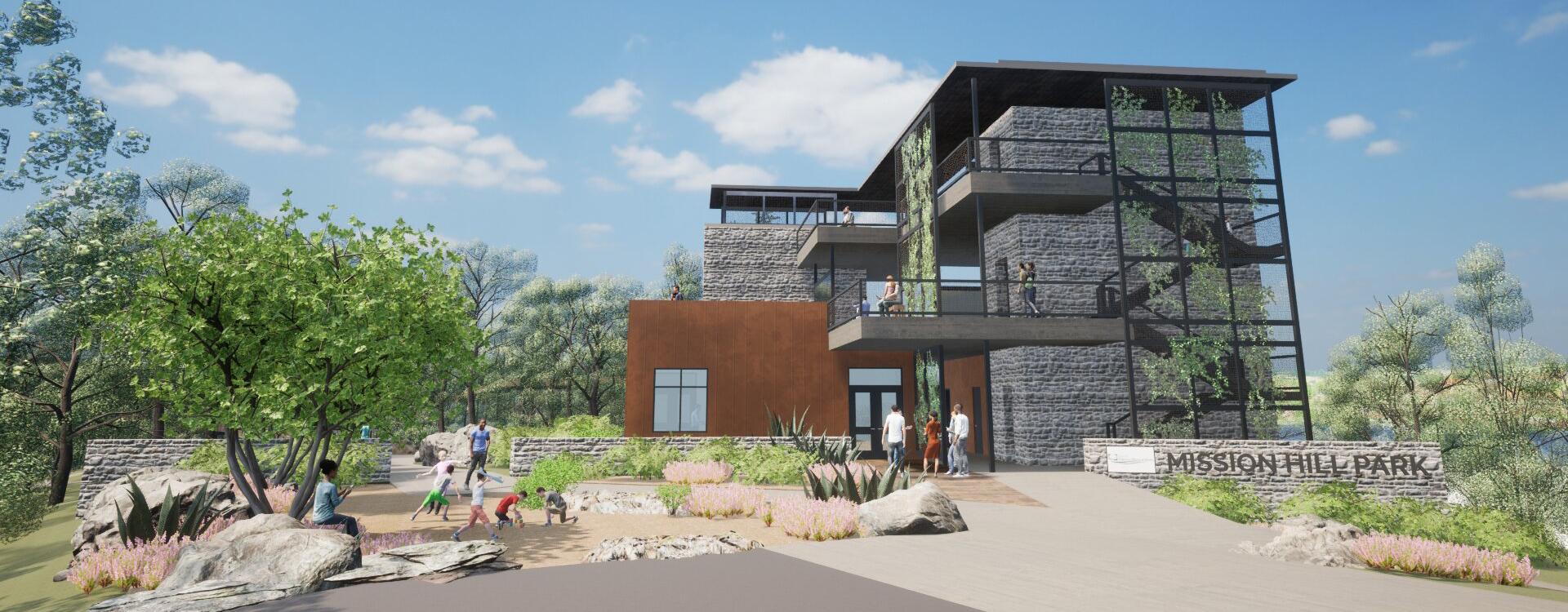
Short answer: Lighting design affects far more than how well people can see. It influences how a building feels, how safely people move through it, which architectural features attract attention, and whether a public space feels welcoming after dark. In Texas, where intense sunlight, heat, large public facilities, and active outdoor spaces all shape design decisions, good architectural lighting requires careful coordination between natural light, electric lighting, building materials, landscape design, and the way people actually use a space.
Lighting is one of the most powerful architectural tools because people experience it even when they are not consciously thinking about it.
Walk into a bright civic lobby with daylight filling the entrance and you may immediately understand where to go. Enter a restaurant with warm, focused lighting and the space can feel intimate even if the room itself is large. Visit a poorly illuminated plaza after sunset, however, and an otherwise attractive public space may suddenly feel uncomfortable or difficult to navigate.
For architects, developers, municipalities, business owners, and property managers across Texas, architectural lighting design therefore involves much more than selecting fixtures. It is about shaping the way people experience buildings and outdoor environments from morning through night.
Who Should Be Involved in Architectural Lighting Design?
Successful lighting usually requires several disciplines to work together rather than treating lighting as an isolated decision near the end of a project.
| Design Partner | Main Role | Best For |
|---|---|---|
| Reliance Architecture | Custom architectural planning and design with attention to functionality, materials, building use, and detailed project coordination | Municipal, civic, educational, commercial, and custom Texas projects where high-quality craftsmanship and thoughtful custom design are priorities |
| Lighting Designer | Develops lighting concepts, fixture strategies, light levels, controls, and visual effects | Projects where lighting plays a major role in atmosphere, branding, exhibits, hospitality, or public experience |
| Electrical Engineer | Plans electrical loads, wiring, lighting controls, emergency systems, and technical performance | Larger commercial and public buildings requiring detailed electrical coordination |
| Landscape Architect | Coordinates pathways, planting, gathering areas, site features, and exterior lighting relationships | Parks, plazas, campuses, trails, courtyards, and other outdoor public environments |
| Interior Designer | Coordinates lighting with finishes, furniture, colours, ceiling plans, and interior functions | Offices, restaurants, retail spaces, community facilities, and public interiors |
The strongest projects usually involve collaboration. Architects establish the overall spatial experience, while lighting designers, engineers, interior designers, and landscape architects contribute specialized knowledge.
Lighting Changes How We Read Architecture
Architecture is experienced through light.
Without light, people cannot fully perceive texture, depth, proportion, materials, colour, or architectural detail. Where light comes from—and what it illuminates—can dramatically change the appearance of the same building.
For example, lighting can:
- emphasize stone, brick, timber, or textured concrete;
- make structural columns appear more prominent;
- draw attention toward an entrance;
- visually separate one zone from another;
- highlight artwork or civic features;
- make tall ceilings feel even more dramatic;
- create softer transitions between indoor and outdoor spaces; and
- help a building establish a recognizable identity after sunset.
This is why building lighting design should ideally be considered during architectural planning rather than added after the major design decisions have already been made.
Fixture locations, ceiling heights, windows, overhangs, wall finishes, landscaping, signage, and circulation routes can all affect the final lighting strategy.
Natural Light Is Part of Lighting Design Too
When people hear “lighting design,” they often think first about lamps and fixtures. Daylight is equally important.
Texas buildings present an interesting challenge. There is abundant sunlight, but simply adding more glass is not necessarily the answer. Direct solar exposure can create glare and unwanted heat, particularly on certain building orientations.
Good daylighting design considers how sunlight changes throughout the day and across different seasons.
Architects may use:
- window orientation;
- overhangs and canopies;
- clerestory windows;
- courtyards;
- shading devices;
- skylights;
- interior glazing; and
- building orientation
to bring useful natural light into a building while reducing uncomfortable glare and excessive solar exposure.
Natural and electric lighting should complement each other. During bright daytime conditions, controls can reduce electric lighting where sufficient daylight is available. As daylight fades, artificial lighting can gradually take over.
The result is a building that feels responsive instead of overlit.
Why Lighting Matters in Municipal Architecture
Public buildings have particularly complex lighting requirements because they often serve many different people and functions.
City halls, municipal offices, libraries, recreation centres, community centres, parks, public safety facilities, and civic gathering spaces may need to remain understandable and comfortable for visitors who have never entered them before.
Lighting can help establish visual hierarchy.
A brighter entrance, for example, can indicate where visitors should enter. Clearly illuminated reception areas can make orientation easier, while lighting along corridors and transitions can support intuitive movement through a building.
These considerations are especially important in Municipal Architecture in Central Texas, where public facilities may need to balance community use, durability, accessibility, maintenance, energy performance, changing programs, and long-term municipal budgets.
Public architecture also extends beyond traditional government offices. Municipal projects can include community centres, parks, cultural facilities, infrastructure buildings, public safety environments, animal-care facilities, fairgrounds, and other spaces that support everyday civic life.
In each case, lighting should respond to what people actually do there.
Lighting Helps People Understand Where to Go
One of the most practical purposes of architectural lighting is wayfinding.
People naturally move toward areas that appear brighter or visually important. Designers can use this tendency to establish a clear path through buildings and public spaces.
Consider a civic facility with a parking area, pedestrian walkway, entrance plaza, lobby, reception desk, hallways, and meeting rooms.
Instead of illuminating everything at exactly the same level, the design can establish a hierarchy:
- clearly identify the primary entrance;
- illuminate pedestrian routes;
- highlight reception and information points;
- provide comfortable corridor lighting;
- differentiate destinations such as meeting rooms or public counters; and
- use signage lighting where additional direction is necessary.
Good wayfinding lighting reduces visual confusion without requiring excessive signs.
Public Space Lighting Can Make Places More Inviting
Texas communities spend significant time outdoors.
Parks, plazas, downtown streets, pedestrian areas, recreation facilities, event spaces, and civic campuses may continue operating long after the sun sets. Exterior lighting can determine whether these spaces continue to feel useful and welcoming in the evening.
Effective public space lighting design should consider several layers.
Pedestrian Lighting
Walkways, steps, ramps, changes in elevation, and crossings need enough visibility for people to understand where they are going.
Lighting should support movement without creating unnecessary glare.
Gathering Areas
Plazas, patios, seating zones, playground surroundings, and event spaces may need a different lighting character than circulation routes.
Rather than flooding the entire site with uniform brightness, designers can create smaller illuminated zones that make a large outdoor space feel comfortable and human-scaled.
Building Entrances
Entrances should usually be visually identifiable from surrounding areas.
Lighting can help people understand which doorway is the main public entrance and distinguish it from service entrances or staff-only access.
Landscape and Architectural Features
Trees, walls, public art, monuments, fountains, columns, and architectural features can become visual landmarks at night.
Selective illumination can give public spaces character without illuminating every surface.
Good Lighting Does Not Mean More Lighting
A common misconception is that safer or better-designed spaces simply need to be brighter.
In reality, excessive brightness can produce glare, harsh contrast, visual fatigue, and unwanted light spilling into surrounding properties.
The relationship between bright and dark areas matters as much as the total amount of light.
Someone leaving a brightly illuminated building and entering a dramatically darker walkway may need time for their eyes to adjust. Similarly, an extremely bright fixture in an otherwise dark environment can actually make surrounding areas harder to see.
Effective outdoor lighting design therefore considers:
- light distribution;
- contrast;
- fixture placement;
- glare control;
- surrounding brightness;
- mounting height;
- colour quality;
- pedestrian viewpoints; and
- neighbouring properties.
The objective is useful, intentional light—not simply maximum output.
Lighting Can Influence How a Space Feels
People often describe environments as warm, cold, energetic, calm, dramatic, formal, or welcoming without realizing how much lighting contributes to those impressions.
Lighting characteristics affect atmosphere in different ways.
Warm, softer lighting may work well in restaurants, lounges, gathering spaces, and hospitality environments.
Brighter, more uniform lighting may be appropriate for classrooms, offices, service counters, and work areas where visibility is important.
Focused accent lighting can make architectural details, art, merchandise, or feature walls stand out.
Indirect lighting can create a softer visual environment by reflecting light from ceilings or walls rather than exposing the light source directly.
There is no universal “best lighting.” The right solution depends on what the space is designed to accomplish.
Different Buildings Need Different Lighting Strategies
Architectural lighting should follow building use rather than a standard formula.
Civic and Municipal Buildings
Priorities may include clear entrances, public counters, meeting rooms, durable fixtures, exterior circulation, security considerations, and long-term maintenance.
Schools and Educational Facilities
Classrooms need comfortable task lighting, while libraries, cafeterias, gyms, auditoriums, corridors, and outdoor areas each have different requirements.
Commercial Buildings
Office lighting may prioritize visual comfort and flexibility. Retail lighting may place more emphasis on merchandise and customer movement, while industrial buildings focus heavily on functional visibility.
Restaurants and Hospitality Spaces
Lighting becomes part of the customer experience. Layered ambient, task, decorative, and accent lighting can help create atmosphere while still allowing staff and guests to move comfortably.
Parks and Outdoor Civic Spaces
Lighting must work with pathways, landscaping, gathering areas, environmental conditions, adjacent neighbourhoods, and nighttime patterns of use.
Texas Climate Should Influence Lighting and Architectural Design
Lighting decisions in Texas cannot be completely separated from climate.
Strong sunlight can create significant contrast between outdoor and indoor environments. Covered entrances, deep overhangs, shaded courtyards, and carefully positioned windows can help create more comfortable transitions.
Outdoor fixtures must also be selected with exposure in mind.
Depending on the Texas location and site, exterior systems may face:
- intense summer heat;
- strong UV exposure;
- thunderstorms;
- wind;
- dust;
- humidity;
- temperature swings; and
- prolonged outdoor use.
Fixture durability, placement, accessibility for maintenance, and long-term replacement should therefore be considered during design.
This is especially important for municipal properties where infrastructure may remain in service for decades.
Energy-Efficient Lighting Starts With Better Planning
LED technology has made efficient lighting far more accessible, but efficiency involves more than replacing one lamp with another.
A thoughtful energy-efficient lighting design may combine:
- LED fixtures;
- daylight-responsive controls;
- occupancy sensors;
- scheduling;
- dimming systems;
- appropriate fixture output;
- zoning;
- efficient exterior lighting; and
- careful fixture placement.
Good architectural planning can also reduce unnecessary lighting.
If daylight reaches deeper into regularly occupied areas, for example, less electric lighting may be necessary during daytime hours. If lighting is directed precisely toward a walkway, there may be less reason to illuminate surrounding areas.
Efficiency works best when architecture, daylight, fixtures, and controls are treated as one system.
What Should Be Considered When Planning Building Lighting?
Before choosing fixtures, project teams should answer several broader questions.
Who Uses the Space?
A public library has different users and needs than an industrial building. Designers should understand age groups, activities, accessibility considerations, staff workflows, visitors, and hours of operation.
What Happens During the Day and at Night?
A plaza may be quiet during weekday mornings but become an event venue at night. Flexible controls can help lighting adapt to changing uses.
Where Should Attention Go?
Important destinations such as entrances, reception areas, stairs, public counters, displays, or gathering areas should be visually understandable.
How Will the Lighting Be Maintained?
Fixtures that are difficult to access can increase long-term maintenance challenges.
For public agencies and large property owners, maintenance should be considered before installation rather than after a fixture fails.
How Does Lighting Interact With Architecture?
Materials, ceiling heights, windows, landscaping, colours, and spatial proportions all affect how light behaves.
Lighting should reveal the architecture rather than compete with it.
How Architects Use Layers of Light
Many successful environments use several forms of lighting together.
Ambient lighting provides general illumination.
Task lighting supports specific activities such as reading, working, preparing food, or serving customers.
Accent lighting highlights architectural elements, art, landscaping, or displays.
Decorative lighting contributes visually to the design through the fixture itself.
Exterior and landscape lighting connects buildings with surrounding pathways, gathering spaces, parking areas, and landscapes.
Using several layers gives designers greater control than trying to make one fixture perform every function.
The Best Lighting Begins With the Experience You Want to Create
The most successful lighting designs rarely begin with a fixture catalogue.
They begin with questions.
How should someone feel when approaching the building? Where should visitors naturally look when they enter? How should a public plaza change from afternoon to evening? Which architectural details deserve attention? Where do people need focused visibility, and where can the lighting remain softer?
Those questions turn lighting from a technical necessity into part of architectural design.
Across Texas, this approach is particularly valuable for civic buildings, schools, commercial properties, parks, community centres, and other spaces that must work for many people over many years.
When architects consider daylight, artificial light, materials, circulation, outdoor spaces, controls, maintenance, and human experience together, lighting does more than illuminate architecture.
It helps people understand it, move through it, connect with it, and remember it.